
Beyond the Blame Game: Turning Red Metrics into Green Opportunities
In the world of commercial excellence and daily management, Key Performance Indicators (KPIs) are our compass. They tell us where we are, where we're going, and whether we're on track. But let's be honest: seeing a "red" metric can often trigger a primal response. It feels like a failure, a misstep, or worse, a reason to point fingers.
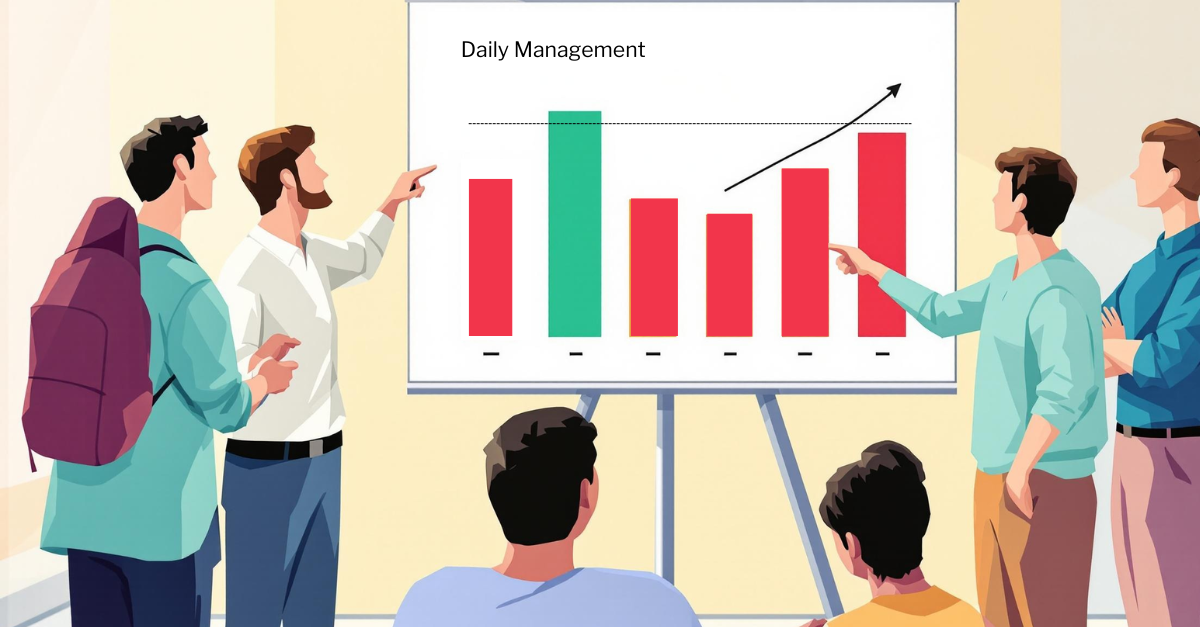
Signs your team fears the red
A culture of fear around red KPIs manifests in several ways:
Hiding or downplaying issues: Problems are swept under the rug.
Blaming or defensiveness: Focus shifts from solutions to scapegoats.
Lack of transparency and open communication: Information silos form.
"Gaming" the system: Data is manipulated to appear favorable.
Short-term focus: Quick fixes are prioritized over sustainable solutions.
Resistance to new metrics: Any new measurement is viewed with suspicion.
Lack of innovation or risk-taking: Teams play it safe to avoid potential "reds."
Anxiety and stress: Reporting becomes a source of dread.
But what if your team saw red - not as a sign of failure, but as a springboard for growth?
Fostering a culture where "red" metrics are seen as opportunities, not failures, isn't just about positive thinking; it’s about building a culture where red metrics are welcomed because they are seen as opportunities, analyzed, and used to drive real improvement. This fundamental shift drives continuous improvement, builds stronger teams, and ultimately leads to sustainable commercial excellence.
Why do people fear red KPI's?
Fear of red KPIs stems from the perception that a "red" status indicates significant issues, failure, or a direct personal judgement of performance. This often happens because red KPIs are associated with missed targets or major problems requiring immediate attention.
The core of this fear lies in the interpretation of these metrics - when red KPIs are viewed as judgement for punishment instead of being seen as neutral indicators for guiding action.
Fearing red is bad for business
When a team fears "red" KPIs, the consequences extend far beyond just missed targets, impacting the entire business. This fear creates a ripple effect, undermining core operational efficiency, innovation, and long-term strategic growth.
Delayed Problem Resolution: When teams hide or downplay issues, they often make reactive decisions under pressure, allowing critical problems to fester and become more complex and costly. This can lead to escalated crises that could have been prevented with earlier intervention and sustainable improvements.
Erosion of Trust and Accountability: Blaming or defensiveness creates a toxic environment where team members are unwilling to take ownership. This erodes trust, hinders collaboration, and makes it impossible to implement effective solutions, as accountability is always shifted.
Poor Decision-Making: A lack of transparency and open communication, coupled with "gaming" the system, means making decisions based on inaccurate or incomplete data. This leads to misinformed strategies, wasted resources, and missed opportunities.
Stifled Innovation and Growth: A short-term focus and resistance to new metrics leads to a lack of innovation or risk-taking. This means the business misses out on crucial opportunities for growth, adapting to market changes, or developing competitive advantages.
Decreased Employee Morale and Productivity: The pervasive anxiety and stress around reporting can lead to burnout, disengagement, lower productivity and high turnover.
Poorly designed KPIs contribute to fear
While team mindset plays a big role in how red KPIs are received, it’s also important to recognize that poorly designed or misaligned KPIs can actually drive anxiety and resistance. Here are a few common pitfalls to watch for:
Lagging vs. Leading Indicators: Over-reliance on lagging indicators (what has happened) without sufficient leading indicators (what will happen or proactive steps) leaves little room for corrective action.
Unrealistic Targets: Setting targets too high without considering resources or external realities makes red KPIs inevitable, leading to widespread demoralization. On the flip side, targets set too low encourage sandbagging, stalling growth and masking true potential.
Perceived Unfairness: If employees feel their efforts are unfairly judged or they are being set up for failure, motivation and engagement plummet.
Lack of Context: A raw red number without context (e.g., historical performance, external factors, root causes) can be misleading and cause unnecessary alarm.
Shifting the Paradigm: From Failure to Fertilizer
So, how do we cultivate an environment where a "red" KPI sparks curiosity, collaboration and growth?
Embrace "Go-See": The Gemba Walk Mindset
Lean principles teach us to "go to the Gemba"—the actual place where the work happens. When a metric turns red, resist the urge to immediately dissect it in a meeting room. Instead, go to the source. Talk to the people doing the work. Observe the process. Often, the solution becomes clear when you understand the reality on the ground, not just the data on a dashboard.
Focus on fixing the system, Not blaming an individual
A red metric is a symptom, not the disease. Build problem-solving into the process to shift the conversation from "Who is responsible for this?" to "What is causing this, and how can we fix the system?" A few steps we recommend to tackle this:
Identify the gap (Plan vs. Actual)
Analyze the root cause (e.g. 5 “Whys”)
Brainstorm countermeasures together
Assign actions and follow up
Promote Psychological Safety: Create a Safe Space for Honesty
Leaders must not only explicitly communicate that honest reporting of metrics is valued, they must “live it.” They set the tone by checking themselves when there is red and making sure their approach is one of constructive growth and understanding.
Encourage questions, experimentation, and even "failing fast" as learning opportunities. This means celebrating insights gained from "failures" as much as successes. Regularly share case studies of how red metrics led to breakthroughs—new processes, better customer experiences, or even new products. When people feel safe, they are more likely to highlight issues early, before they escalate.
Adopt a "Test and Learn" Continuous Improvement Mentality
Commercial excellence is not achieved through perfect execution from day one. Encourage teams to view strategies and initiatives as hypotheses to be tested. If a metric goes red, it simply means the hypothesis wasn't entirely correct, providing valuable data to iterate and improve.
Make It a Team Sport
While metrics do require an owner, shared accountability shifts from “who’s at fault?” to “how can we help?” Encourage cross-functional collaboration to tackle countermeasures.
Visualize for Transparency & Action, Not Judgment
Daily management boards and visual KPIs should be tools for collective understanding and action planning, not public shaming. When a metric is red, the board should prompt the questions:
Did we have a plan? (If no plan, start there)
If there was a plan, was it followed? (If not followed, start there)
If the plan was followed, what actions can we take to drive to root cause and countermeasures?
What support does the team need?
Celebrate the Recovery, Not Just the Target Hit
Acknowledge and celebrate when a team successfully identifies the root cause of a red metric, implements a solution, and brings it back to green. This reinforces the desired behavior and demonstrates that the journey from red to green is a valuable achievement in itself.
Conclusion: The Power of a Growth Mindset
Fostering a culture where "red" metrics are opportunities is about embedding a growth mindset within your organization. It's about seeing every data point, especially the challenging ones, as an invitation to learn, adapt, and become more robust. By shifting from a culture of blame to one of curiosity and collective problem-solving, your team will not only achieve commercial excellence but also build the resilience and collaborative spirit needed to thrive in an ever-changing market.
So, the next time you see a red number pop up on your dashboard, resist the urge to sigh. Instead, lean in. Ask "Why?" and see it for what it truly is: a valuable opportunity to learn, to improve, to grow together.